
Please Choose Your Language
- All
- Product Name
- Product Keyword
- Product Model
- Product Summary
- Product Description
- Multi Field Search

Views: 0 Author: Site Editor Publish Time: 2026-09-28 Origin: Site


The operational lifespan of an HVAC unit directly ties to the integrity of its internal motor components. Specifically, the durability of the magnet wire under continuous thermal, mechanical, and chemical stress determines whether a system runs for decades or fails prematurely. This guide focuses strictly on internal electromagnetic coil wire used for stator windings. We distinguish this highly specialized magnet wire from external HVAC supply lines, such as 10/2 or 10/3 AWG wire, and color-coded thermostat wiring. Specifying the wrong internal wire leads to rapid insulation breakdown, short circuits, and catastrophic motor failure. These internal failures result in costly warranty claims, product recalls, and severe brand damage. To prevent these outcomes, engineers must carefully evaluate and select the optimal enameled wire for air conditioner motors. We provide a rigorous technical framework for evaluating and selecting the optimal wire, balancing thermal performance, refrigerant compatibility, and manufacturing scalability.
Hermetic compressor motors require specialized insulation (e.g., Polyesterimide/Polyamide-imide) to withstand prolonged exposure to refrigerants and lubricating oils without degrading.
Selecting between copper and enameled aluminum wire for motors requires a strict analysis of slot fill factor, thermal conductivity, and unit cost targets.
Specifying 180 class magnet wire (or higher) is critical for modern inverter-driven AC motors that experience rapid thermal cycling and voltage spikes.
Partnering with a rigorously vetted enameled wire manufacturer mitigates supply chain risks and ensures compliance with NEMA or IEC testing standards.
Stator windings inside air conditioning units endure massive operational stress. Defining the continuous operating temperature and peak thermal load requirements is the first step in the engineering process. Compressor motors operate in high-heat, high-pressure environments, while condenser fan motors face ambient outdoor temperature fluctuations. The chosen wire insulation must handle the continuous thermal baseline without degrading. It must also survive the extreme thermal overload conditions that occur during locked-rotor events or rapid compressor startups. Engineers map these thermal requirements directly to specific NEMA or IEC thermal classes to ensure the insulation does not melt or carbonize under peak load.
Matching the wire diameter to the AC unit's tonnage and Minimum Circuit Ampacity (MCA) prevents overheating in the starting and running windings. Wire diameters typically range from 0.100 mm to 4.500 mm depending on the application. A 5-ton commercial compressor draws significantly more current than a 1.5-ton residential unit. Undersized wire increases electrical resistance, leading to excessive I⊃2;R losses and rapid heat generation. Engineers calculate the exact cross-sectional area required to carry the maximum continuous current safely. Proper sizing ensures the motor winding wire operates efficiently without exceeding the thermal limits of the chosen insulation class.
Refrigerant and oil compatibility represents a non-negotiable success criterion for hermetic compressors. The magnet wire sits directly in the flow of modern refrigerants like R-410A and R-32. The industry shift toward R-32 introduces higher discharge temperatures, placing even greater thermal and chemical stress on the enamel. The wire also experiences constant exposure to synthetic lubricants, such as Polyolester (POE) or Polyvinyl Ether (PVE) oils. Incompatible enamel absorbs these chemicals, leading to blistering, softening, or complete extraction of the insulation. Extracted enamel particles clog capillary tubes and expansion valves, destroying the entire HVAC system. Engineers evaluate insulation resistance through rigorous sealed-tube testing to guarantee long-term chemical stability.
Mechanical strength dictates the wire's survival during manufacturing. Modern coil production utilizes automated, high-speed winding machines that apply immense tension to the conductor. The wire must possess high elongation properties and exceptional flexibility to bend around tight stator slot radii without snapping. The enamel coating requires high abrasion resistance. If the winding process causes micro-cracking or scrapes the insulation, the motor suffers from turn-to-turn shorts and fails high-voltage dielectric testing before it leaves the factory floor.
Modern inverter-driven AC motors introduce high-frequency voltage spikes (dV/dt) generated by Variable Frequency Drives (VFDs). When a VFD sends a pulse-width modulated (PWM) signal, the rapid voltage rise time creates a voltage overshoot at the motor terminals. This overshoot exceeds the partial discharge inception voltage (PDIV) of the air voids in the winding, causing partial electrical discharges known as corona. Standard enamel insulation degrades rapidly under continuous corona discharge, leading to premature dielectric failure. Engineers designing inverter motors specify corona-resistant insulation. This specialized enamel contains inorganic metal oxide nanoparticles that dissipate the electrical stress, significantly extending the motor's operational lifespan under VFD control.
The choice between copper and aluminum conductors fundamentally alters the motor's design and manufacturing economics. Copper provides superior electrical conductivity and excellent tensile strength. It requires a smaller cross-sectional area to carry a specific current, allowing for highly compact motor designs. Copper also withstands the mechanical tension of high-speed winding machines better than softer metals. However, copper is heavy and subject to significant commodity price volatility. Aluminum offers a lightweight, highly cost-effective alternative. Specifying enameled aluminum wire for motors drastically reduces raw material costs and overall unit weight, lowering shipping and handling expenses.
Transitioning to aluminum requires a strict analysis of the slot fill factor and necessitates motor redesign. Aluminum possesses roughly 61% of the electrical conductivity of copper. To achieve equivalent current carrying capacity and prevent overheating, engineers must increase the aluminum wire cross-sectional area by approximately 1.6 times. This means the wire diameter must increase by roughly 26%. This larger wire bulk directly impacts the stator design. Stator slots must be enlarged to physically accommodate the increased volume of wire. If the existing lamination design cannot hold the required aluminum turns, the motor suffers from reduced efficiency or fails to meet torque specifications.
Identifying the ideal use cases for specific aluminum wire types optimizes production costs. External condenser fan motors present a prime opportunity for material substitution. These motors operate outside the hermetic compressor shell, meaning extreme chemical resistance to refrigerants is less of a factor. Engineers frequently specify polyurethane enameled aluminum wire for these applications. Polyurethane insulation provides excellent solderability and adequate thermal protection for ambient outdoor environments. This targeted application leverages aluminum's cost and weight advantages without compromising the chemical integrity required inside the compressor.
Addressing connection and termination realities is vital when implementing aluminum wire. Aluminum exhibits cold flow under mechanical pressure, meaning it slowly deforms and loosens over time in standard screw terminals. It also forms a highly resistive oxide layer instantly upon exposure to air. Mating aluminum wire with copper terminals creates a high risk of galvanic corrosion in humid HVAC environments due to the differing anodic indices of the two metals. Manufacturers cannot use standard copper termination methods. They implement specialized crimping techniques using insulation-piercing connectors that bite through the oxide layer. Alternatively, they apply specific soldering fluxes designed specifically for aluminum. Failure to secure robust terminations results in high-resistance joints, localized overheating, and eventual electrical fires.
Property | Copper Conductor | Aluminum Conductor |
|---|---|---|
Electrical Conductivity (IACS) | 100% | 61% |
Specific Gravity (Weight) | 8.89 g/cm³ (Heavier) | 2.70 g/cm³ (Lighter) |
Tensile Strength | High (Resists snapping during winding) | Lower (Requires careful tension control) |
Required Cross-Section for Equal Ampacity | Baseline (1.0x) | Approx. 1.6x larger |
Termination Requirements | Standard soldering, crimping, brazing | Piercing splices, specialized flux, anti-oxidant paste |
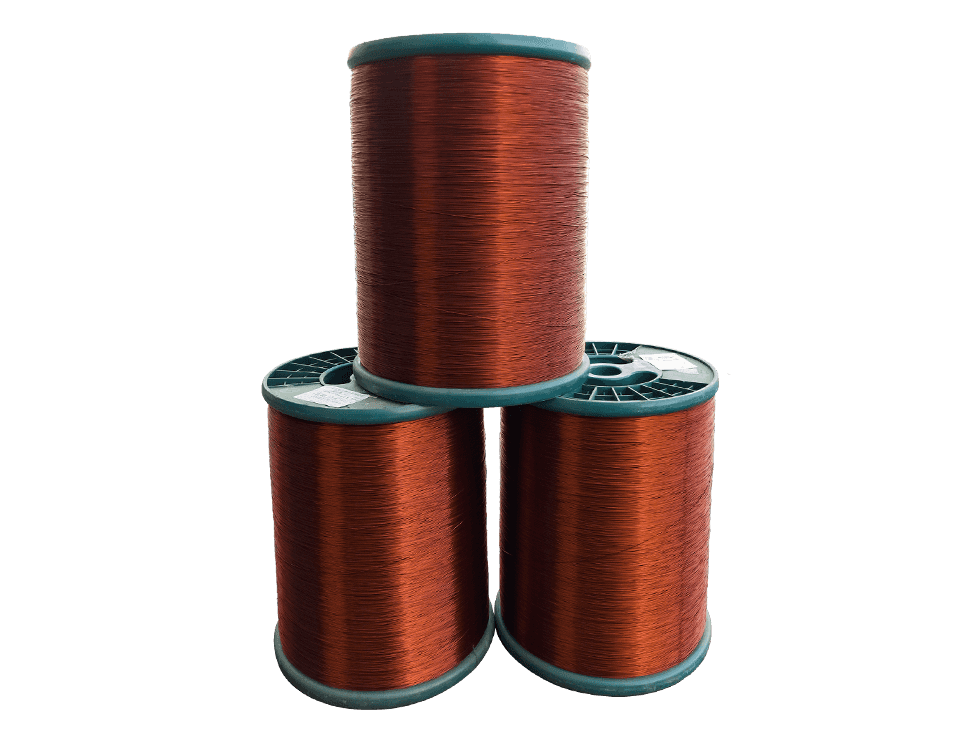
Understanding the thermal spectrum from 155°C to 240°C is vital for matching wire insulation to specific HVAC applications. Modern, high-efficiency air conditioning motors operate under intense thermal loads, establishing 180 class magnet wire (Class H) and 200°C (Class N) as the baseline standards for reliability. Basic external fan motors, which experience better airflow and lower ambient heat, often operate safely using 155°C (Class F) insulation. Extreme industrial HVAC applications, such as rooftop units in desert climates, demand 220°C or 240°C insulation to prevent catastrophic thermal breakdown during peak summer loads.
The chemical composition of the enamel dictates its performance in different AC motor environments. Engineers choose between Polyurethane, Polyesterimide (PEI), and Polyamide-imide (PAI) based on the motor's location and function.
Polyurethane: This material offers excellent solderability. The insulation burns off cleanly during the soldering process at temperatures around 380°C, eliminating the need for mechanical or chemical stripping. This characteristic makes it highly suitable and cost-effective for standard, high-volume external fan motors where rapid termination speeds production.
Polyesterimide (PEI): PEI provides high thermal stability and good general chemical resistance. It serves as a reliable standard for many internal AC applications where direct refrigerant exposure is limited but thermal demands remain high. It resists cut-through under mechanical pressure better than polyurethane.
Polyamide-imide (PAI) overcoated PEI: This dual-coat system represents the absolute industry standard for hermetic compressor motors. The PAI topcoat delivers unmatched resistance to refrigerant blistering and chemical extraction from POE oils. It provides exceptionally high burnout thresholds during locked-rotor conditions, ensuring the compressor survives severe electrical faults without the enamel melting.
Evaluating insulation thickness, known as build grades, requires balancing electrical protection against thermal management. Grade 1 (Single build) provides the thinnest insulation layer, typically adding 1 to 2 mils to the overall diameter. It maximizes the slot fill factor and allows for optimal heat dissipation from the conductor to the stator core. Grade 2 (Heavy build) adds 3 to 4 mils, while Grade 3 (Triple build) offers even thicker insulation. These higher grades maximize dielectric strength and provide superior mechanical protection against abrasion during winding. Engineers frame this trade-off carefully. Thicker insulation reduces the available space for the conductor, potentially increasing operating temperatures, but provides necessary protection against high-voltage spikes in inverter-driven systems.
Strict dimensional tolerances are vital when specifying custom wire for automated manufacturing. Even microscopic variations in wire diameter cause significant issues on the production line. Oversized wire leads to winding jams and physical damage to the enamel as it forces its way through tensioners and ceramic guides. Diameter inconsistency alters the electrical resistance per meter. Engineers rely on precise custom enameled wire specifications, often demanding tolerances as tight as +/- 0.001 mm, to ensure every motor rolls off the line with predictable, uniform electrical characteristics.
Custom wire specifications directly impact the integration with HVAC electrical schematics. Air conditioner motors utilize distinct starting and running winding circuits. These circuits require highly specific resistance values and exact turn counts to generate the correct magnetic fields and starting torque. If the wire diameter deviates from the specification, the resistance changes, altering the motor's current draw and thermal profile. Exact dimensional control ensures the physical winding matches the theoretical schematic design perfectly, preventing motors from drawing excessive locked-rotor amps (LRA).
Evaluating self-bonding capabilities streamlines specific manufacturing processes. Self-bonding overcoats consist of a secondary layer of thermoplastic or thermosetting resin, such as epoxy or polyvinyl butyral, applied over the primary insulation. During manufacturing, the coil is wound without a bobbin. Heat (via oven baking or resistance heating) or a chemical solvent is applied, causing the overcoat to melt and fuse the individual turns together. This creates a highly rigid, self-supporting coil structure. This rigidity is necessary for components subjected to intense operational vibration within the HVAC unit, preventing mechanical wear and friction between adjacent wire turns.
Specifying the correct surface lubrication and finish prevents damage during high-speed winding. Bare enamel creates high friction as it passes over ceramic guides, pulleys, and tensioners at speeds exceeding 2000 RPM. Manufacturers apply specialized surface lubricants, such as minute quantities of paraffin wax or specific synthetic mineral oils, to reduce this friction coefficient. Proper lubrication ensures smooth winding and prevents enamel abrasion. Engineers verify that these lubricants do not contaminate the internal motor environment or react negatively with the refrigerants and POE oils inside a hermetic compressor. Incompatible lubricants wash off into the refrigerant stream and foul the expansion valves.
Verifying quality control and testing standards is the primary step in evaluating a supply partner. The manufacturer must strictly adhere to recognized international standards, specifically NEMA MW 1000 or IEC 60317. A reputable enameled wire manufacturer provides comprehensive, documented testing data for every batch. This documentation includes results for continuous pinhole testing (faults per 100 feet), dielectric breakdown voltage (volts per mil), and thermoplastic flow (cut-through temperature). Without rigorous, documented quality control, engineers risk introducing latent defects into the HVAC production line, leading to high field failure rates.
Assessing supply chain stability and raw material sourcing protects production schedules. The global markets for copper and aluminum experience significant price volatility and occasional supply disruptions. The chosen manufacturer must possess the financial capacity and strategic sourcing relationships to absorb these market shocks. They guarantee consistent lead times for high-volume production runs by dual-sourcing raw copper rod and aluminum ingots. A supplier with limited raw material access causes production bottlenecks, delaying HVAC unit assembly and impacting seasonal market availability.
Prototyping capabilities and deep technical support separate standard vendors from true engineering partners. Developing a new AC motor design requires extensive validation. The supplier provides rapid custom wire samples for Accelerated Life Testing (ALT). Engineers subject these samples to extreme temperature cycling and prolonged exposure in specific refrigerant and oil environments prior to approving full-scale production. A manufacturer that offers dedicated technical support during this testing phase helps identify potential insulation failures early in the design cycle, saving thousands of dollars in redesign costs.
Audit your current motor designs to identify peak operating temperatures and locked-rotor thermal spikes before selecting an insulation class.
Cross-reference your selected wire insulation against the specific refrigerants (R-410A, R-32) and synthetic oils (POE, PVE) used in your compressors to verify chemical compatibility.
Calculate the required stator slot expansion and redesign the laminations if you plan to transition from copper to aluminum conductors.
Request physical wire samples and documented NEMA test reports from your shortlisted suppliers to verify dielectric strength and abrasion resistance.
Initiate accelerated life testing on prototype coils to validate long-term reliability under simulated field conditions prior to full-scale production.
A: Supply wire (like 10/2 AWG) and color-coded thermostat wire route external electrical power and low-voltage control signals to the HVAC unit. Enameled motor winding wire is the micro-thin, insulated electromagnetic coil wire located internally within the stator. It generates the magnetic fields required to drive the compressor and fan motors.
A: Engineers determine internal motor wire diameter based on the unit's required current carrying capacity and the motor's specific torque requirements. They calculate the cross-sectional area needed to handle the continuous current without exceeding the thermal limits of the chosen insulation class, while ensuring the wire physically fits within the stator slots.
A: Yes, aluminum replaces copper to reduce weight and material costs. Because aluminum has lower electrical conductivity, engineers specify a larger wire diameter to carry the same current. This requires recalculating the slot fill factor and redesigning the stator laminations to accommodate the larger wire volume.
A: Inverter-driven motors use Variable Frequency Drives (VFDs) that generate rapid, high-frequency voltage spikes (dV/dt). These spikes cause localized electrical discharges known as corona. Standard insulation degrades quickly under corona stress. Corona-resistant wire contains specialized metal oxide additives that dissipate this electrical stress, preventing premature dielectric failure.
A: Hermetic compressor motors require at least Class H (180°C) or Class N (200°C) insulation. The insulation must be a dual-coat system, usually Polyamide-imide (PAI) over Polyesterimide (PEI), to withstand continuous exposure to high temperatures, pressurized refrigerants, and synthetic lubricating oils without blistering or degrading.
A: Refrigerants act as powerful solvents under high pressure. If the wire enamel is incompatible, the refrigerant and synthetic oils penetrate the insulation, causing it to soften, swell, or blister. The enamel eventually extracts from the wire, leading to electrical short circuits and clogging the HVAC system's expansion valves with debris.


