
Please Choose Your Language
- All
- Product Name
- Product Keyword
- Product Model
- Product Summary
- Product Description
- Multi Field Search

Views: 240 Author: Site Editor Publish Time: 2026-04-29 Origin: Site


Removing the tough insulation layer from winding materials remains a frustrating bottleneck for many engineers and technicians. You might find yourself snapping fine wires or struggling to get solder to stick properly. Doing this incorrectly leads to severely compromised electrical connections, high-frequency signal loss, or catastrophic wire fatigue under vibration. There is no universal "best" stripping method, as the optimal approach depends strictly on the polymer composition, wire gauge, and intended production scale. We will explore an evidence-based framework to evaluate mechanical, thermal, and chemical stripping methods. You will learn how to select the safest and most scalable solution without damaging the sensitive copper core. We will also examine advanced industrial machinery and alternative connector strategies to streamline your workflow.
Identify the Polymer First: Polyurethane coatings are thermally solderable; Polyimide (Kapton) and heavy Formvar require aggressive mechanical or chemical removal.
Avoid the "Vanishing Wire" Trap: High-temperature soldering on ultra-thin wire (e.g., 36 AWG) can literally dissolve the copper core into the tin bath.
Mechanical Risks: Improper manual scraping creates micro-fissures in the copper, leading to vibration-induced fatigue failure in final assemblies.
Scalability & Compliance: Automated fiberglass stripping wheels offer the highest ROI for production lines by eliminating chemical disposal and toxic off-gassing hazards.
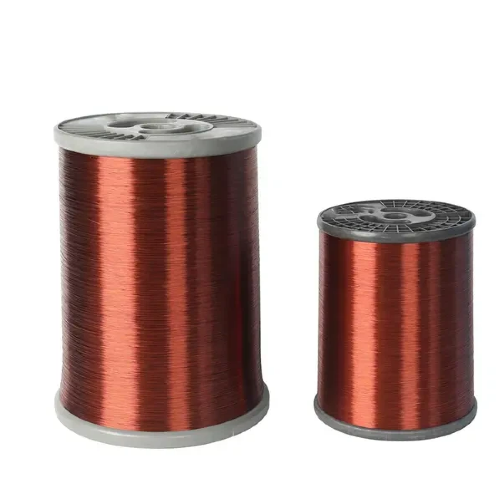
Many technicians make a common mistake during repair jobs. They attempt to soak coated wires in standard paint thinners or hardware store acetone. The polymer resistance problem makes these chemicals largely ineffective. Modern Enameled Copper Wire is coated in highly inert polymers. Manufacturers engineer these plastics specifically to resist harsh industrial environments. They withstand aggressive fluids, extreme heat, and severe friction.
You must understand the solderable versus non-solderable framework before choosing a stripping method. Different insulation classes dictate completely different removal strategies.
Polymer Type | Thermal Class | Characteristics | Ideal Stripping Method |
|---|---|---|---|
Polyurethane | 155°C | Low-cost, designed specifically as "solderable enamel" | Immediate thermal stripping (Solder Pot) |
Polyamide/Polyester (Nylon/Mylar) | 130°C - 180°C | Mid-tier chemical resistance, moderate toughness | Mechanical intervention or automated wheels |
Polyimide (Kapton) | 200°C+ | High-cost, extreme thermal and chemical resistance | Strictly mechanical scraping or restricted acids |
Your actionable next step is simple. Always request the exact insulation specification from your material provider before you build out a stripping process. Knowing the polymer type prevents wasted effort and destroyed materials downstream.
Manual friction and blade-based abrasion represent the standard solution category for one-off tasks or field repairs. Hobbyists and repair engineers frequently rely on these methods. However, manual methods introduce significant risks if operators lack precision.
You can use the "Marker Hack" as a visual quality assurance tool. Over-sanding quickly damages the delicate core. To prevent this, coat the target stripping area with a dark permanent marker. Lightly sand the wire until the marker color disappears completely. This visual cue ensures you only remove the enamel layer while leaving the base metal intact.
Handling extremely fine wire requires strict procedures. If you work with 42 AWG, follow this exact standard operating procedure (SOP):
Fold a small piece of 1000-grit wet/dry sandpaper in half.
Pinch the wire lightly inside the folded crease.
Rotate the wire exactly one-quarter turn while maintaining gentle pressure.
Release the paper, inspect the wire, and repeat if necessary.
Never pull or scrape the wire vertically. Vertical scraping instantly snaps micro-wires. There is a serious implementation risk regarding metal fatigue. Using an X-acto knife or harsh abrasive at a perpendicular angle leaves micro-scores on the surface. In high-vibration applications like drone motors or automotive sensors, these tiny scratches become guaranteed break points.
This solution category relies on heat degradation and aggressive solvent application. These methods prioritize speed but require strict safety controls.
Solder pot immersion remains the industry standard for batch-stripping polyurethane coatings. You dip the wire into a controlled molten tin bath. The heat instantly melts the coating and tins the wire in one fluid motion. This works perfectly for solderable enamels.
However, operators must understand the solder dissolution phenomenon. This is a critical risk warning. When you hot-strip fine wire above 350°C, the tin aggressively alloys with the thin copper. This reaction literally dissolves the wire completely into the solder bead. Operators must immediately drop the iron or pot temperature below 250°C the moment the enamel breaches.
Using open flames like lighters or matches introduces combustion and soot drawbacks. Open flames carbonize the enamel into a hard copper oxide scale. If you do not mechanically clean this scale and treat it with a strong acid flux, the residual soot causes severe galvanic corrosion over time.
Engineering forums frequently suggest dangerous DIY methods. You should avoid these entirely:
Aspirin (Acetylsalicylic Acid): Heating a pill under the wire releases highly toxic, irritating off-gasses that damage your respiratory system.
Hydroperitum: Often suggested as a chemical alternative, it still poses inhalation risks in unventilated spaces.
Molten Sodium Hydroxide (NaOH): This extremely caustic chemical is effective for stripping but presents severe blinding and skin-melting hazards. It requires comprehensive PPE.
When you move past prototyping, you need automated, non-chemical machinery for scalable, compliant manufacturing. Hand-stripping hundreds of wires destroys production timelines and introduces vast inconsistencies.
Fiberglass wheel strippers offer the optimal commercial solution for thin gauges. These machines excel with SWG 36 to 25 (0.2 to 0.5mm) wire. They use conical fiberglass wheels spinning at high speeds. The soft friction strips limitless lengths continuously without gouging the sensitive core.
For tougher jobs, rotary scalpel machines are necessary. You need these for "Heavy Formvar" and tough Polyimide coatings. These units use a spinning collet of precision blades. They cleanly shave thick insulation off heavy magnet wire used in massive transformer manufacturing.
Machine Type | Wire Gauge Compatibility | Insulation Types Handled | Primary Advantage |
|---|---|---|---|
Fiberglass Wheel Stripper | SWG 36 to 25 (Fine) | Polyurethane, Polyester | Soft friction, prevents core gouging |
Rotary Scalpel Machine | SWG 24 to 10 (Thick) | Polyimide, Heavy Formvar | Precision blade shaving for tough plastics |
Evaluating ROI for these machines is straightforward. Upgrading to automated stripping eliminates the massive bottleneck of manual labor. It standardizes the precise stripping length, which is vital for automated crimping machines. Furthermore, physical stripping bypasses the stringent environmental compliance required for disposing of chemical acid baths.
Sometimes the best way to solve a stripping problem is to bypass it entirely. For specific data transmission and low-voltage applications, you can use alternative connectors. Engineers often utilize "Vampire crimps" or Insulation Displacement Connectors (IDC). These mechanisms completely eliminate the need to strip anything. The connector’s sharp internal blades pierce the tough enamel to make direct contact with the core.
Supplier-level problem solving is another powerful strategy. The most efficient way to handle insulation removal is to specify the correct material at the procurement stage. Too many companies struggle with aggressive mechanical methods simply because they ordered the wrong insulation class for their assembly line.
You can apply strict shortlisting logic here. Partnering with a great plated wires supplier ensures you receive exact material data sheets. If your production line primarily utilizes wave soldering, you should source strict polyurethane-coated variants. This foresight completely prevents the need to invest in expensive fiberglass stripping machines downstream. Matching your procurement strategy directly to your factory floor capabilities eliminates friction.
Effective enamel removal is fundamentally an exercise in material matching. You must pair the polymer type with the correct removal strategy.
Mechanical methods require extreme care. You must avoid perpendicular scraping to prevent structural fatigue and micro-fissures.
Thermal methods must be strictly temperature-controlled. Exceeding 350°C rapidly causes copper dissolution in fine gauges.
Audit your current material specifications immediately. If operators struggle to clean ends efficiently, you are likely using a tough Polyimide-class coating where a simple Polyurethane class would suffice.
Consider pivoting to automated fiberglass friction tools. This ensures scalable quality control and eliminates dangerous chemical handling on your production floor.
A: Vertical blade scraping creates microscopic notches in the copper. Any slight bending or vibration will cause the wire to snap exactly at that weak point. Use ultra-fine sandpaper folded over the wire, or opt for a chemical or thermal approach for gauges smaller than 30 AWG.
A: Rarely. Modern wire insulation utilizes chemically inert polymers like Nylon, Mylar, or Kapton. Manufacturers cross-link these plastics specifically to resist standard industrial solvents and harsh operational environments.
A: At temperatures above 300°C, molten solder rapidly alloys with pure copper. For ultra-thin wire, this metallurgical reaction happens so fast that the copper core literally dissolves into the solder bead. Keep your iron below 250°C once the enamel breaches.
A: No. Open flames leave behind highly conductive carbon soot and localized copper oxides. This inevitably creates "cold joints" that fail under mechanical load and invite long-term galvanic corrosion.


