
Please Choose Your Language
- All
- Product Name
- Product Keyword
- Product Model
- Product Summary
- Product Description
- Multi Field Search

Views: 0 Author: Site Editor Publish Time: 2026-11-20 Origin: Site


Sourcing magnet wire carries massive stakes for any electrical manufacturing operation. Minor variances in enamel consistency or conductor purity cause catastrophic short circuits. Thermal breakdown follows, leading to massive liability in finished products. Engineering and procurement teams constantly struggle to align technical specifications with a supplier's actual production realities. Unlike discrete mechanical manufacturing, magnet wire production operates as a continuous process. A single inline failure compromises miles of product. This reality frequently triggers severe supply chain bottlenecks and highly inconsistent batch quality. Selecting the right partner requires moving past basic price-per-pound metrics. You must rigorously evaluate a supplier’s quality control frameworks. Material sourcing and specific manufacturing capabilities demand close, technical inspection. This guide outlines the exact criteria for auditing and shortlisting a reliable partner.
Standardization is Non-Negotiable: A credible manufacturer must demonstrate verifiable compliance with NEMA MW 1000, IEC, or JIS standards, supported by rigorous in-house dielectric and mechanical testing.
Material Versatility Matters: Evaluating whether a supplier is a specialized enameled copper wire manufacturer, an enameled aluminum wire manufacturer, or capable of hybrid solutions like Copper Clad Aluminum (CCA), dictates their ability to support diverse application requirements.
Insulation Expertise Dictates Performance: The ability to precisely apply advanced coatings, such as polyesterimide magnet wire enamel, or specialty wrappings (fiberglass, mica) directly impacts the thermal endurance and lifespan of motors, transformers, and generators.
Scalability Mitigates Risk: A robust custom magnet wire supply chain requires transparent lead times, raw material buffering, and the capacity to scale from low-volume prototyping to high-volume continuous production.
Before contacting vendors, define your exact operational parameters. Identify the continuous operating temperatures of the end product. Note the peak thermal loads your system will endure during overload conditions. Thermal classifications typically range from Class 130 to Class 240. Motors running in heavy industrial settings demand higher thermal endurance to prevent premature insulation degradation. If you specify a Class 155 wire for a traction motor that regularly hits 180°C during hill climbs, the enamel will carbonize. Define the required dielectric strength. Establish breakdown voltage thresholds based on the operating environment. High-voltage transformers need robust insulation layers to prevent arcing between adjacent turns. Inverter-duty motors driven by Variable Frequency Drives (VFDs) face severe voltage spikes. These rapid dV/dt spikes cause corona discharge, rapidly destroying standard enamels. You must specify corona-resistant insulation if your application involves VFDs. Documenting these electrical demands prevents under-specifying the wire, saving thousands in warranty claims down the line.
Assess the physical space available in your motor stator. Evaluate the transformer core dimensions carefully. Tight winding spaces require wire with excellent dimensional tolerances. Slot fill factor determines the efficiency of the motor. Higher fill factors require precision-drawn wire. Determine the flexibility and elongation requirements. The wire must withstand automated winding processes. High-speed winding machines exert significant tension and sharp bending forces. Poor flexibility causes enamel micro-cracking. Micro-cracks lead to premature electrical failure in the field. Evaluate the need for self-lubricating overcoats. These specialized nylon topcoats reduce friction during automated winding. Reduced friction lowers the physical stress on the copper core. It also prevents the winding needles from scraping the primary insulation layer. When a winding needle scrapes the enamel because the wire lacks a self-lubricating overcoat, you don't find out until the stator fails hi-pot testing at the end of your assembly line.
Evaluate the operating environment for chemical hazards. Motors in HVAC systems face constant refrigerant exposure. Hermetic compressors use aggressive refrigerants like R-134a, R-410a, or R-1234yf. The wire enamel must not blister or degrade when submerged in these chemicals under high pressure. Transformers sit submerged in specialized cooling oils. The insulation must remain stable and not contaminate the dielectric fluid. Industrial generators operate in high-moisture or corrosive atmospheres. Electric vehicle traction motors expose windings to Automatic Transmission Fluid (ATF). The insulation must resist these specific elements over a twenty-year lifespan. Specify chemical resistance requirements early in the sourcing process. Request compatibility test data from the supplier for your specific environmental fluids. If they cannot produce a 1000-hour submersion test report for your specific ATF or refrigerant, find another vendor.
Your supplier must demonstrate deep metallurgical knowledge. A competent Enameled Copper Wire Manufacturer needs high-purity oxygen-free copper (OFC) sourcing for fine wire applications. Impurities in standard electrolytic tough pitch (ETP) copper rod cause wire breaks during the high-speed drawing process. Precise drawing processes prevent surface defects like slivers or burrs. Consistent annealing ensures optimal conductivity and flexibility. Aluminum requires entirely different handling techniques. An Enameled Aluminum Wire Manufacturer must manage unique metallurgical challenges. Aluminum is soft and galls easily inside drawing dies. Surface preparation dictates the success of the coating. Preventing oxidation prior to enameling ensures proper enamel adhesion. Aluminum serves weight-sensitive applications like aerospace actuators perfectly. Determine if the manufacturer offers Copper Clad Aluminum (CCA). CCA serves as a highly effective hybrid alternative. It provides a strategic middle ground for weight reduction. It also maintains high-frequency conductivity due to the skin effect, where alternating current crowds toward the highly conductive copper outer layer.
Analyze the range of available enamels. Standard options include Polyurethane, Polyester, and Polyamide-imide. High-temperature applications require advanced polymer chemistry. Evaluate their ability to produce Polyesterimide Magnet Wire. This specific dual-coat or single-coat wire offers exceptional thermal stability. It suits Class 180 and Class 200 applications perfectly. Beyond liquid enamels, assess specialty wrappings. Extreme environments demand paper, fiberglass, mica, or ceramic coatings. These materials survive extreme high-voltage or severe-duty environments where liquid polymers fail. Assess the precision of their varnish application process. Enamel concentricity dictates reliable performance. Uniform build thickness prevents weak spots in the insulation. If the wire sits off-center in the enamel die, one side gets three mils of insulation while the other gets half a mil. Advanced manufacturers use inline laser micrometers to monitor build thickness in real-time, automatically adjusting die alignment to maintain perfect concentricity.
Verify the manufacturer's tooling and drawing capabilities. They must handle round wire in various AWG or metric sizes, typically ranging from heavy AWG 4 down to ultra-fine AWG 44. Fine wire production requires exceptionally clean manufacturing environments. Evaluate capabilities for rectangular or flat wire. Flat wire dominates high-density winding applications. It maximizes slot fill factors in modern electric vehicle motors. Pay close attention to the corner radii of rectangular wire. Sharp corners cause the liquid enamel to thin out during curing due to surface tension. This thinning creates dangerous electrical weak points along the edges of the wire. Check for advanced product lines. Continuously Transposed Conductors (CTC) serve large power transformers. CTC requires highly specialized transposition machinery to weave multiple rectangular wires together. Only top-tier facilities possess this equipment and the engineering staff to run it effectively.
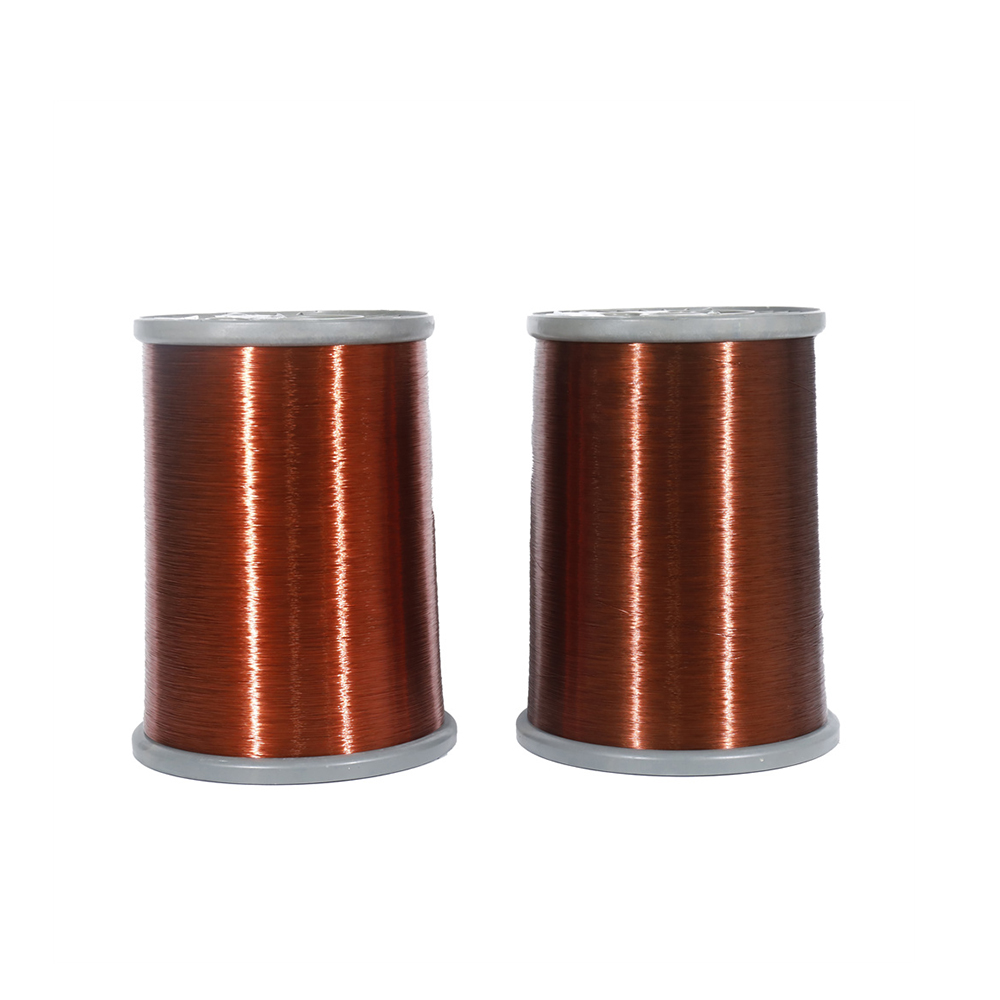
Require documented proof of adherence to NEMA MW 1000 specifications. This standard strictly defines magnet wire properties across the North American market. It covers conductor purity, insulation build, and thermal endurance. For global operations, verify compliance with IEC 60317 or JIS C 3202 standards. Verify ISO 9001 certification for Quality Management. Check for ISO 14001 certification for Environmental Management. Environmental compliance indicates proper handling of volatile enamel solvents. Look for UL recognized insulation systems (OBMW2). UL recognition accelerates the certification process for your final product. Compliance ensures predictable performance across different production batches. Never accept verbal assurances of standard compliance. Demand the actual certificates and verify their expiration dates.
Robust testing separates reliable suppliers from risky ones. Continuous inline pinhole testing is mandatory. Equipment must detect microscopic faults at high production speeds without damaging the wire. Dielectric breakdown voltage and continuity checks verify insulation integrity. Mechanical testing simulates winding stress. Technicians must check elongation, spring-back, adherence, and flexibility. The snap test verifies that the enamel remains bonded when the wire is suddenly stretched to its breaking point. Thermal testing verifies class ratings. Heat shock and thermoplastic flow testing prevent field failures. Tangent delta testing measures the curing degree of the enamel. Under-cured enamel lacks chemical resistance. Over-cured enamel becomes brittle and flakes off during winding.
Testing Category | Specific Test Method | Purpose / Defect Prevented |
|---|---|---|
Electrical | Inline Pinhole (Fault) Test | Detects microscopic gaps in enamel coating during production. |
Electrical | Dielectric Breakdown | Ensures insulation withstands peak voltage spikes without arcing. |
Mechanical | Elongation & Spring-back | Verifies wire flexibility for high-speed automated winding machines. |
Mechanical | Peel & Adherence (Snap Test) | Confirms enamel bonds tightly to the copper or aluminum core. |
Thermal | Heat Shock | Ensures insulation won't crack under sudden extreme temperature shifts. |
Thermal | Thermoplastic Flow (Cut-through) | Prevents short circuits when hot wires press against each other. |
Chemical | Solvent Resistance | Verifies enamel will not dissolve in refrigerants or transformer oils. |
Evaluate the supplier's lot-tracking systems. Traceability must extend from raw rod to finished spool. You need to know the exact origin of the metal. Modern facilities use integrated ERP systems with barcode tracking on every single spool. Request sample Certificates of Analysis (CoA). CoAs verify data transparency for each shipment. The CoA should list the exact test results for that specific spool, not generic nominal values. Consistent documentation proves their quality control system actually works. Check how they manage the shelf-life of their liquid enamels. Expired enamels cause severe adhesion failures during the curing process. A rigorous first-in, first-out (FIFO) inventory system for raw chemicals prevents these hidden defects.
Assess the manufacturer's willingness to produce small batch runs. R&D teams need short runs for prototyping new motor designs. Ask about their Minimum Order Quantities (MOQs) for custom designs. Evaluate their transition process. Moving from prototype to full-scale production requires careful planning. Ask about lead times during this scale-up phase. Some facilities excel at volume but struggle with nimble prototyping. A strong Custom Magnet Wire Supply partner maintains dedicated R&D coating lines. These smaller lines allow for rapid iteration without disrupting main production schedules. Verify their capacity limits to ensure they can grow alongside your product demand.
Determine their ability to engineer specific solutions. A reliable partner adapts to your exact engineering needs. You might need custom build thicknesses to hit a specific impedance target. Specialized bonding layers, like self-bonding wire, streamline motor assembly. Self-bonding wire eliminates the need for secondary varnish dipping. You wind the coil, apply heat or a solvent, and the outer layer melts to fuse the coil into a solid mass. Non-standard dimensions require custom drawing dies. Verify they have an in-house tooling shop to support this. In-house tooling drastically reduces lead times for custom rectangular wire profiles. Ask about their ability to apply multiple different polymer layers for highly specialized dielectric requirements.
Analyze the trade-offs between domestic and overseas sourcing. Domestic sourcing offers shorter lead times and simplified logistics. Overseas manufacturing provides high-volume production efficiency. Top-tier factories in Asia often possess highly specialized, modern equipment. Evaluate their raw material buffering strategies. Copper and aluminum markets experience high volatility based on global commodity trading on the LME or COMEX. Effective hedging protects you from sudden price spikes. Discuss tolling agreements. Under a tolling agreement, you purchase the copper rod directly and pay the manufacturer only for the drawing and enameling process. This strategy offers greater control over raw material expenses and stabilizes your quarterly procurement budgets.
Identify risks associated with single-source dependency. Niche products carry higher supply chain risks. Specialized coatings or custom CTC assemblies require backup plans. Establish strict Service Level Agreements (SLAs) with your chosen Magnet Wire Manufacturer. Define acceptable delivery timelines clearly. Set firm thresholds for acceptable defect rates, usually measured in parts per million (PPM). Hold the supplier accountable for these metrics through regular quarterly business reviews. Require the supplier to maintain a specific amount of safety stock in a local warehouse. This buffer inventory protects your production lines from shipping delays, customs holds, or sudden spikes in your own manufacturing volume.
Never skip the physical site visit for major contracts. Create a detailed checklist for the audit. Inspect the cleanliness of the drawing and enameling environment. Dust control prevents pinholes in fine wire. A dirty factory guarantees inconsistent wire quality. Review the maintenance schedules of their drawing dies. Worn dies cause dimensional variations and surface scratches. Check the calibration records for their enameling ovens. Temperature control in the curing oven dictates the final polymer structure of the enamel. Consistent long-term quality relies entirely on rigorous, documented equipment maintenance. Observe the operators to ensure they actually follow the documented standard operating procedures. Ask operators directly how they handle a wire break during production to gauge their training levels.
Selecting the right partner requires balancing upfront material costs against long-term component reliability. Quality control, continuous inline testing, and standard compliance must outweigh marginal price differences. Narrow down suppliers based on their proven Magnet Wire Production Capabilities and specific conductor expertise. Do not compromise on traceability or facility cleanliness.
Request detailed technical data sheets for your required thermal class and dimensions.
Order sample spools to conduct in-house automated winding and destructive testing.
Initiate a formal facility audit for your top two vendor candidates using a strict cleanliness and calibration checklist.
Establish a Service Level Agreement defining defect thresholds, delivery buffers, and raw material hedging strategies.
Run a pilot production batch to verify winding machine compatibility before signing a long-term volume contract.
A: Enameled wire manufacturers possess specialized chemical coating lines and curing ovens. They apply precise, microscopic layers of electrical insulation to the conductor. Bare wire suppliers only handle the metallurgical processes. They draw and anneal the metal rod into specific wire diameters without adding any dielectric protection.
A: NEMA MW 1000 provides a standardized baseline for the industry. It strictly defines conductor purity, insulation build, and thermal properties. Compliance ensures the wire will perform predictably in your application. It guarantees consistent quality regardless of the specific manufacturing facility producing the spool.
A: Aluminum is ideal when weight reduction and cost savings are prioritized over maximum volumetric conductivity. It is heavily utilized in automotive components, aerospace applications, and large transformers. The reduced weight lowers transportation costs and improves the efficiency of weight-sensitive mechanical systems.
A: CCA is a composite conductor featuring an aluminum core bonded to a copper skin. It offers a strategic balance for engineers. CCA provides the lightweight properties of aluminum alongside the superior high-frequency conductivity and easy solderability of pure copper.
A: Polyesterimide features a highly stable chemical structure. This allows the insulation to maintain dielectric strength and resist heat shock under extreme stress. It performs reliably at continuous operating temperatures of 180°C to 200°C, making it perfect for heavy-duty industrial motors.
A: Top manufacturers use inline laser micrometers for strict dimensional control. They deploy continuous high-voltage fault testing during the enameling process. Additionally, they conduct rigorous batch sampling in their labs to verify mechanical flexibility, enamel adherence, and thermal endurance.
A: Yes, specialized manufacturers provide alternative insulations for extreme environments. They apply wrappings like kraft paper, fiberglass, mica, and ceramic. These materials are used in extreme high-voltage transformers or ultra-high-temperature environments where standard liquid enamels would quickly degrade or fail.


