

Views: 0 Author: Site Editor Publish Time: 2026-08-07 Origin: Site


Substandard primary insulation in magnet wire causes catastrophic short-circuits and premature motor failures. The global enameled wire market will surge from $18.6 billion in 2025 to $32.4 billion by 2034. Securing a reliable vendor is a high-stakes engineering and procurement decision. Procurement and engineering teams struggle to balance unit cost with the stringent thermal, electrical, and mechanical consistency required for automated winding and long-term reliability. You cannot afford to rely on unverified suppliers when winding high-efficiency motors or heavy-duty transformers. Moving beyond basic spec sheets requires a rigorous evaluation framework. This guide outlines how to audit a manufacturer’s testing protocols, production capabilities, and quality control systems to ensure scalable, compliant performance. We detail the exact metrics you need to verify before approving a new enameled wire manufacturer for your production lines.
Prioritize Empirical Testing: A credible manufacturer must provide transparent data on dielectric strength, thermal aging, and mechanical elasticity (rebound angle).
Verify Compliance Standards: Active UL certifications and rigorous in-house quality control laboratories are non-negotiable for mitigating end-product liability.
Assess Customization Capabilities: The ability to engineer custom enameled wire for specific thermal classes (e.g., Class 200) and insulation builds (Grade 1 vs. Grade 2) separates commodity vendors from strategic partners.
Evaluate Supply Chain Resilience: A reliable magnet wire supplier must demonstrate raw material traceability and scalable production capacity to buffer against market volatility and accelerating global demand.
Sourcing cheap, unverified wire introduces severe risks to your production line. Inconsistent enamel coating directly correlates with primary insulation failure. When the insulation barrier degrades, adjacent copper turns make contact. This creates a localized short-circuit. The resulting heat buildup destroys the surrounding winding. Motor breakdown follows rapidly. Field failures damage brand reputation, and warranty claims drain profitability. Production downtime halts manufacturing schedules while engineers scramble to identify the root cause of the failure.
You must establish strict success criteria for vendor selection to avoid these outcomes. Baseline expectations must include consistent dimensional tolerances. Verified thermal endurance is mandatory. Zero-defect insulation continuity is non-negotiable. When winding stators, engineers push for the highest possible copper density to maximize motor efficiency. If the enamel thickness varies by even a few microns across a spool, the wire will not fit into the designated slot. The automated insertion equipment will scrape the oversized wire, stripping the insulation and guaranteeing a ground fault.
Evaluating an enameled copper wire supplier requires looking at their defect rates and concentricity standards. Ask for historical data on pinhole counts per kilometer. Review their dimensional tolerance capabilities. High-speed winding machines jam if the wire diameter fluctuates. Consistent outer diameter ensures smooth coil insertion. It prevents mechanical stress on the enamel during automated manufacturing. The copper conductor must sit perfectly in the center of the insulation layer. Eccentricity leads to thin spots that fail under high voltage stress.
Defect Type |
Root Cause in Manufacturing |
Impact on End Product |
|---|---|---|
Eccentricity |
Misaligned coating dies or uneven varnish flow |
Thin insulation spots leading to low breakdown voltage |
Pinholes |
Dust in the curing oven or impure varnish |
Immediate turn-to-turn short circuits |
Brittle Enamel |
Over-curing in the baking oven |
Insulation cracking during automated winding |
Soft Enamel |
Under-curing or trapped solvents |
Poor abrasion resistance and chemical degradation |
Dielectric strength measures the maximum voltage the insulation can withstand before breaking down. A credible supplier establishes strict dielectric strength baselines. They conduct high-voltage testing on finished spools. This verifies the enamel layer provides adequate electrical isolation. Breakdown voltage thresholds must exceed the operational requirements of your specific application. A standard Grade 2 wire might need to withstand 5000V during a twisted pair test, where technicians twist two wires together and apply increasing voltage until the insulation fails.
Pinhole and continuity verification prevent microscopic bare spots. Inline high-voltage continuity testing is mandatory. The wire passes through a high-voltage bath or dry sponge during production. Any insulation flaw registers immediately on the monitoring equipment. This detects defects before the wire leaves the factory. You must audit the supplier's inline testing setup to ensure they log every fault per 100 feet of wire.
Request documentation on their standard breakdown voltage thresholds.
Verify the frequency of their high-voltage spool testing.
Inspect their inline continuity monitoring equipment during a facility audit.
Ask how they handle spools that fail the pinhole test.
Ensure their testing aligns with NEMA MW 1000 or IEC 60317 standards.
Motors and transformers generate significant heat. Thermal aging protocols validate the lifespan of the wire under operational temperatures. Evaluate the supplier's methodology for Full Thermal Aging versus One Temperature Thermal Aging tests. Full thermal aging takes thousands of hours. It establishes the true thermal class based on the 20,000-hour rule. For example, Class 200 means the wire can operate at 200°C for 20,000 hours before the insulation degrades to a specific baseline. One temperature aging acts as a faster batch verification method.
Heat shock testing simulates harsh operational conditions. Winding induces mechanical stress. Heating stressed wire causes the polymer chains to contract. If the enamel lacks flexibility, it cracks. The test involves wrapping wire tightly around a metal mandrel one to three times its diameter. Technicians then bake it in an oven at 20% above its rated temperature. If the enamel cracks, the batch fails. This ensures the coating remains flexible and intact during high-temperature applications.
High-speed automated winding machines exert immense tension on the wire. Softness and elastic deformation dictate how the wire behaves under this stress. Manufacturers measure the rebound angle to evaluate softness. They bend the wire to a specific angle and release it. The degree to which it springs back is the rebound angle. A low rebound angle indicates dead-soft copper. This ensures the coil holds its shape without fracturing. Springy copper fights the winding machine, causing loose coils and poor slot fill.
Elongation and tensile strength prevent wire breakage. Copper must stretch 30% or more without snapping. Detail the acceptable parameters for copper elongation with your winding wire manufacturer. Proper inline annealing softens the copper after the drawing process. This restores its ductility. The annealing process must occur in a steam or nitrogen atmosphere to prevent copper oxidation. If the wire is too brittle, it will snap during drawing or automated winding, causing costly production delays.
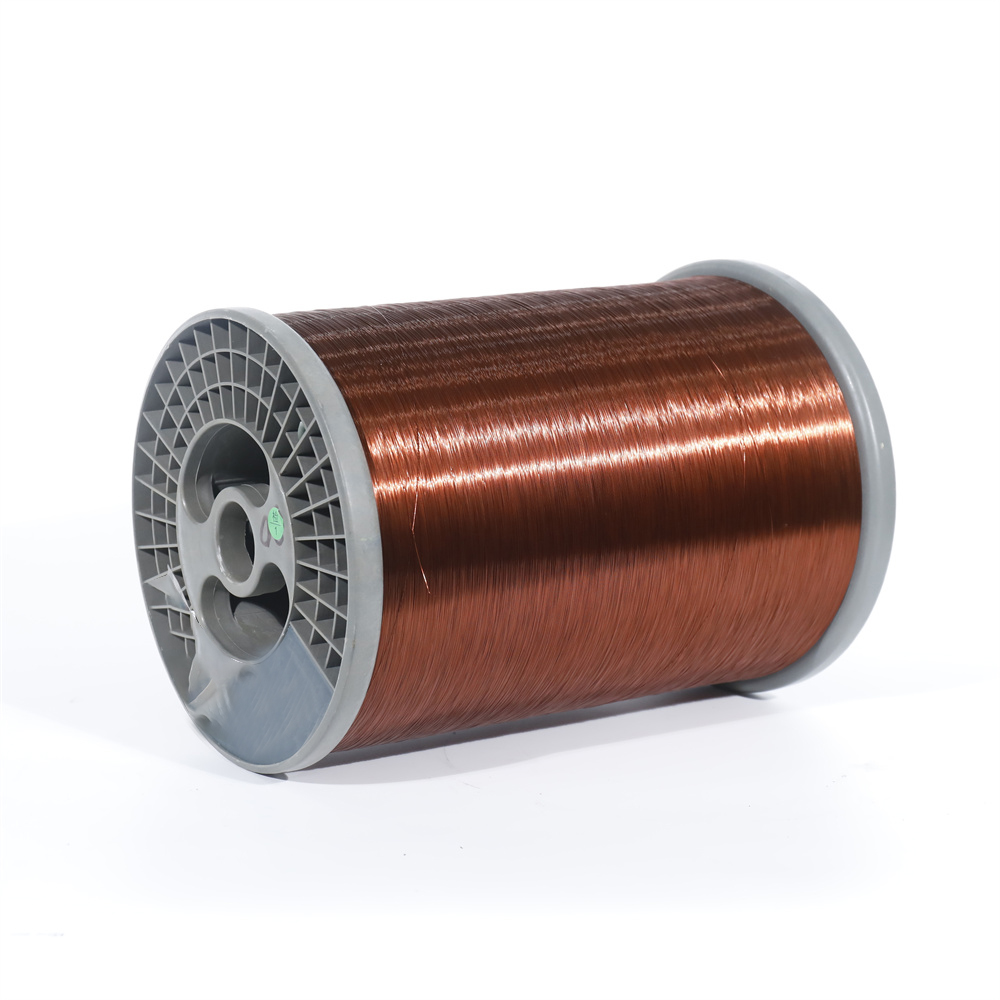
Insulation build variations determine the thickness of the enamel coating. Assess the vendor's ability to consistently apply different thicknesses. Grade 1 offers a single build, used primarily in space-constrained micro-motors. Grade 2 provides a heavy build, serving as the standard for industrial motors. Grade 3 is a triple build for severe duty applications. You must balance the required dielectric protection against slot space constraints in your motor design. Thicker enamel takes up more physical space but offers higher voltage resistance.
Varnishing and coating precision separate top-tier suppliers from average ones. Audit the manufacturer's multi-pass varnishing processes. Applying many thin layers is superior to applying a few thick layers. It ensures uniform enamel distribution and improves adhesion to the base conductor. Look for suppliers using precision die wiping rather than older felt wiping methods. Die wiping uses calibrated metal dies to scrape off excess varnish, ensuring perfect concentricity.
Evaluate the manufacturer's capacity for custom engineering. Standard off-the-shelf wire does not fit every application. You may need custom enameled wire tailored to tight resistance specifications. Inverter-duty motors require specialized corona-resistant enamels to withstand high-frequency voltage spikes. A strategic partner can adjust their drawing and coating processes to meet these unique environmental exposures.
Insulation Build Grade |
Coating Thickness |
Primary Application |
Dielectric Strength |
|---|---|---|---|
Grade 1 (Single Build) |
Thin |
Space-constrained micro-motors |
Standard |
Grade 2 (Heavy Build) |
Medium |
Standard industrial motors and transformers |
High |
Grade 3 (Triple Build) |
Thick |
High-voltage applications, severe environments |
Very High |
Determine if the supplier has the expertise to draw and coat various base metals. High-purity Grade A copper cathode is the industry standard. It offers superior conductivity and prevents wire breaks during drawing. Aluminum wire reduces weight and material costs for specific transformer applications. Specialized alloys provide unique resistance properties. The manufacturer must possess the correct drawing dies and annealing profiles for each specific metal.
Enamel chemistry matching dictates the wire's thermal class. Review the availability of different polymer coatings. Polyurethane (Class 130/155) burns off during soldering, making it ideal for small electronics. Polyesterimide (Class 180) offers excellent mechanical toughness. Polyamide-imide (Class 200/220) withstands extreme heat and chemical exposure, such as refrigerants in hermetic compressors. The supplier must recommend the correct chemistry for your operational environment.
Verifying certifications is a mandatory step in vendor evaluation. Outline how to check a manufacturer's active UL file numbers. Do not accept expired or pending certificates. The wire must comply with UL 1446 (Systems of Insulating Materials) to ensure compatibility with the varnish, slot liners, and tape used in your motor. Compliance with international standards like IEC, NEMA, and JIS ensures global compatibility. These standards dictate exact testing methodologies for dimensional tolerances, thermal aging, and dielectric strength.
Material verification guarantees the chemical composition of the wire enamel. Top-tier manufacturers use Infrared (IR) spectroscopy. This technology creates a chemical fingerprint of the cured enamel. It ensures the coating matches certified baselines exactly. If the chemical supplier changes their liquid enamel formulation, IR spectroscopy detects the discrepancy immediately. This prevents unapproved material substitutions from entering your supply chain.
Strict quality control requires a fully equipped in-house laboratory. Detail the specific testing equipment a reliable manufacturer should have on-site. Laser micrometers measure wire diameter continuously during production. Dielectric testers verify breakdown voltage. Tangent delta testers measure the curing degree of the enamel. Elongation testers ensure copper ductility. Mandrel wrap testers check enamel flexibility. Without this equipment, the supplier operates blindly.
Traceability isolates and resolves potential defects quickly. Every finished spool must link back to a specific raw copper rod heat number. It must trace back to the exact batch of liquid enamel used. If a field failure occurs, traceability allows you to identify the root cause. You can then quarantine affected batches before they enter your production line.
Verify the calibration records of all in-house testing equipment.
Request a sample batch tracking report for a finished spool.
Check if the laboratory operates independently from the production floor.
Ensure testing personnel hold relevant quality certifications.
Review their procedures for quarantining non-conforming materials.
Industry demand is accelerating at a projected 6.3% CAGR. Assess how the magnet wire supplier manages sudden spikes in order volume. They must scale production without compromising drawing tolerances or curing times. If a vendor speeds up the enameling line to meet demand, the wire spends less time in the curing oven. Under-cured enamel is soft and fails abrasion tests. Over-cured enamel is brittle and fails heat shock tests.
Look for investments in facility modernization. Modern, automated enameling lines reduce human error. They increase throughput consistency. Automated tension controllers prevent wire stretching during the coating process. Computer-controlled curing ovens maintain exact temperature profiles across multiple heating zones. A supplier investing in modern equipment demonstrates a commitment to long-term quality and scalability.
Market volatility mitigation requires strong upstream relationships. Evaluate the manufacturer's connections with raw copper and chemical suppliers. Stable pricing and availability depend on these relationships. A supplier who buys copper exclusively on the spot market will pass price fluctuations directly to you. Look for vendors with long-term raw material contracts to stabilize your procurement costs.
Review the supplier's logistics and delivery standards. Packaging prevents transit damage. Spool types, such as PT-25, PT-90, or PT-200, must match your automated winding equipment. Tapered spools allow high-speed de-reeling without tangles. Pallets must be shrink-wrapped and strapped securely to prevent spools from shifting during transport. Scratched enamel from poor packaging renders the wire useless. Review their historical on-time delivery performance to ensure they can meet your production schedules.
Take the following immediate actions to secure a reliable vendor for your production lines:
Request Technical Data Sheets (TDS) for your specific required thermal class to verify baseline performance.
Order sample spools to conduct internal winding and resistance prototyping on your own equipment.
Schedule a formal facility audit to review their inline testing procedures and laboratory calibration records.
Verify their UL file numbers directly through the official UL database to confirm active compliance.
A: Grade 1 features a single, thinner layer of enamel insulation. It is used where space is highly constrained. Grade 2 has a heavier, thicker enamel build. It provides higher dielectric strength and greater protection against mechanical stress. Grade 2 is the standard for most industrial motors and transformers.
A: Manufacturers use thermal aging tests. Full Thermal Aging involves baking the wire at elevated temperatures for thousands of hours to determine its true thermal class. One Temperature Thermal Aging is a shorter batch test used to verify that a specific production run meets the established thermal baseline.
A: The rebound angle measures the wire's softness and elastic deformation. A low rebound angle indicates the copper is dead-soft. This ensures the wire bends easily and holds its shape tightly during high-speed automated winding. If the wire is too springy, the coil will unravel or deform.
A: A reliable supplier must hold active UL certifications for their specific insulation systems. They should also comply with international manufacturing standards such as IEC, NEMA, or JIS. ISO 9001 certification is essential to prove they maintain a rigorous, documented quality management system.
A: Pinholes are microscopic bare spots caused by dust, impurities, or uneven varnish application during production. Quality control prevents them by using multi-pass varnishing techniques. Inline high-voltage continuity testing detects these flaws instantly, allowing operators to halt production and fix the issue before the spool is finished.
A: Drawing copper wire through dies hardens the metal, making it brittle. Inline annealing applies controlled heat to the wire immediately before varnishing. This restores the copper's ductility and softness, ensuring it can withstand the tension of automated winding machines without snapping.


