
Please Choose Your Language
- All
- Product Name
- Product Keyword
- Product Model
- Product Summary
- Product Description
- Multi Field Search

Views: 0 Author: Site Editor Publish Time: 2026-08-05 Origin: Site


The rapid adoption of inverter-driven systems, particularly in electric vehicles (EVs) and variable frequency drives (VFDs), exposes motor windings to high-frequency voltage spikes and steep wave fronts (dv/dt). These voltage surges initiate partial discharges (the corona effect) within the winding micro-voids, rapidly eroding standard primary insulation, accelerating thermal aging, and causing premature stator failure. Upgrading to corona resistant enameled wire is no longer optional for high-reliability applications; it is a baseline requirement to ensure lifecycle longevity, electrical safety, and operational efficiency. This guide details the technical evaluation criteria for selecting and sourcing the correct wire for high-voltage environments.
Material Science is the Differentiator: True corona resistance relies on specialized enamel compositions (often nanoparticle-doped polyimide or polyamideimide) that dissipate localized discharge energy without degrading the base polymer.
Thermal and Electrical Synergy: High breakdown voltage must be paired with high thermal endurance, as partial discharge inherently generates localized heat that compromises standard enameled copper wire.
Design Trade-offs: Specifying thicker enamel coatings increases dielectric strength but requires careful recalculation of the motor’s slot fill factor and thermal dissipation pathways.
Substrate Versatility: While copper remains the standard for conductivity, advanced manufacturers now apply corona-resistant enamels to aluminum wire to support lightweighting initiatives in aerospace and automotive sectors.
Vendor Capabilities Matter: Selecting an insulation wire manufacturer requires auditing their batch-to-batch coating consistency, adherence to IEC/NEMA standards, and custom diameter scalability.
Modern pulse-width modulated (PWM) inverters utilize fast-switching semiconductors, such as Insulated-Gate Bipolar Transistors (IGBTs) or Silicon Carbide (SiC) MOSFETs. These components create steep voltage rise times, often exceeding 10 kV/µs. When these rapid voltage pulses reach the motor terminals, the voltage does not distribute evenly across the entire winding. The first few turns of the coil absorb the vast majority of the voltage drop, creating severe localized electrical stress.
This stress frequently exceeds the breakdown voltage of the air trapped in the microscopic voids between adjacent wires or between the wire and the stator core. According to Paschen's Law, when the electrical field surpasses the dielectric strength of this trapped gas, ionization occurs. This localized ionization is a partial discharge, commonly referred to in the field as corona. The continuous bombardment of ions and electrons acts like a microscopic sandblaster against the primary insulation layer. Standard wire enamels lack the physical and chemical resilience to withstand this continuous energy dissipation.
Continuous corona discharge initiates a destructive cycle of chemical and physical degradation. The ionization of air generates ozone, a highly reactive oxidizing agent. Ozone aggressively attacks the polymer chains of standard insulation, causing rapid oxidation and embrittlement. Simultaneously, the discharge process generates localized micro-heating, pushing the polymer beyond its thermal limits.
Physical degradation occurs through polymer chain scission. The kinetic energy of the electrons and ions striking the enamel surface breaks the chemical bonds of the base resin. As the polymer erodes, the insulation thins, reducing its dielectric strength. This thinning accelerates the partial discharge activity, creating a runaway failure mechanism. Eventually, the insulation breaches entirely, leading to a turn-to-turn short circuit. Standard enameled copper wire experiences rapid catastrophic failure under these conditions, often within hundreds of hours of operation.
Degradation Mechanism | Cause | Effect on Standard Insulation |
|---|---|---|
Chemical Oxidation | Ozone generation from ionized air | Embrittlement, loss of flexibility, micro-cracking |
Thermal Degradation | Localized heating from discharge energy | Resin melting, accelerated thermal aging |
Physical Erosion | Electron and ion bombardment | Polymer chain scission, insulation thinning |
Premature stator failure carries severe operational and financial consequences. In mission-critical applications like electric vehicle propulsion or industrial automation, a shorted winding results in immediate catastrophic motor failure. This triggers unplanned downtime, halting production lines or stranding vehicles.
The downstream effects include expensive warranty claims, reputational damage, and complex repair logistics. Replacing a failed stator requires complete motor disassembly, rewinding, and re-impregnation. By failing to specify the correct insulation at the design phase, manufacturers expose themselves to massive field failure risks. Investing in robust insulation upfront prevents these cascading failures and ensures the motor meets its intended operational lifespan.
The primary defense against partial discharge lies in the chemistry of the wire enamel. Standard enamels utilize unmodified polymers like polyester, polyurethane, or standard polyamideimide. Corona-resistant wire enamel incorporates advanced polymer matrices—such as polyimide, polyamide, polyesterimide, or polyetherimide—heavily doped with inorganic nanoparticles. Silica (SiO2), alumina (Al2O3), and titania (TiO2) are commonly used dopants.
These nanoparticles fundamentally alter the erosion mechanism. When partial discharge attacks the surface, the organic polymer binder begins to erode. However, the inorganic nanoparticles resist the electrical and chemical degradation. As the surface polymer burns away, a dense layer of these inorganic particles remains exposed. This microscopic shield deflects further electron bombardment, scatters the discharge energy, and drastically slows the erosion rate. This nanoparticle shielding extends the insulation lifespan by orders of magnitude compared to standard resins.
Engineers must match the advanced enamel with the appropriate conductive substrate. Copper remains the industry standard due to its superior electrical conductivity and thermal performance. Applying corona-resistant enamels to traditional copper substrates maximizes power density, allowing for highly compact motor designs. This is critical in applications where space constraints dictate the motor footprint.
Conversely, aluminum substrates offer significant weight reduction. Advanced manufacturers now apply these specialized enamels to corona resistant wire made of aluminum to support lightweighting initiatives. While aluminum requires a larger cross-sectional area to carry the same current as copper, the overall weight savings benefit aerospace actuators and specific automotive components. The adhesion characteristics of the nanoparticle-doped enamel must be precisely calibrated for the chosen substrate to prevent delamination during winding.
Evaluating a wire's ability to withstand continuous high-voltage spikes requires analyzing its dielectric strength and breakdown voltage. Dielectric strength measures the maximum electric field the insulation can withstand before breaking down, typically expressed in volts per micrometer (V/µm). Breakdown voltage is the absolute voltage threshold at which the insulation fails.
Standard magnet wire exhibits a high initial breakdown voltage, but this value plummets rapidly under continuous partial discharge. Corona-resistant designs maintain their dielectric integrity over time. Engineers evaluate the voltage endurance curve, which plots the applied voltage against the time to failure. A robust wire demonstrates a flattened curve, indicating long-term survival under continuous electrical stress. Testing often involves twisted pair specimens subjected to high-frequency AC voltage until failure occurs.
Electrical stress and heat are deeply interconnected in high-voltage environments. Partial discharge inherently generates localized heating at the discharge site. Therefore, corona-resistant insulation must also function as a high temperature wire. Standard thermal classes (Class 130 or 155) degrade too quickly under this combined electro-thermal stress.
High-reliability applications demand Class 200, Class 220, or Class 240 thermal ratings. These ratings indicate the temperature at which the wire can operate continuously for 20,000 hours without significant degradation. The base resins used in corona-resistant formulations, particularly polyimide and polyamideimide, inherently possess these high thermal endurance capabilities. This thermal headroom prevents the localized heating of partial discharge from causing rapid polymer embrittlement.
Feature | Standard Magnet Wire | Corona Resistant Enameled Wire |
|---|---|---|
Enamel Composition | Standard Polyester, Polyurethane, Polyamideimide | Nanoparticle-doped Polyimide, Polyamideimide, Polyesterimide |
Partial Discharge Resistance | Low (Rapid erosion and chain scission) | High (Inorganic shielding prevents rapid erosion) |
Voltage Endurance | Fails quickly under continuous dv/dt spikes | Maintains dielectric strength over extended periods |
Thermal Class | Typically Class 130 to Class 200 | Typically Class 200, Class 220, or Class 240 |
Primary Application | Line-fed motors, standard transformers, low-voltage devices | EV traction motors, VFD-driven industrial motors, high-voltage generators |
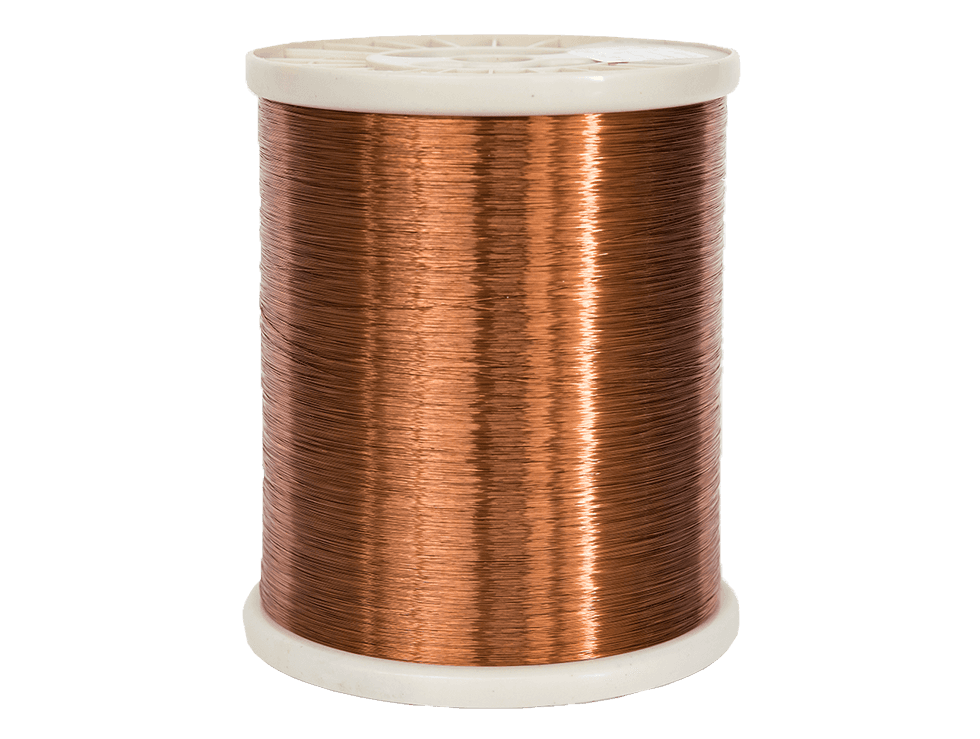
The automotive industry's transition to 800V and 1000V electrical architectures places unprecedented stress on traction motors. Higher system voltages allow for faster charging and reduced cable weight, but they drastically increase the risk of partial discharge within the stator. Next-generation mobility relies heavily on hairpin motor windings to maximize slot fill and efficiency. These rigid, rectangular conductors experience intense electrical stress at the bends and connection points.
In these environments, high efficiency, long life, and electrical safety are non-negotiable. Standard insulation degrades rapidly under the continuous high-frequency switching of silicon carbide (SiC) inverters used in modern EVs. Utilizing specialized motor winding wire with corona-resistant properties ensures the traction motor survives the harsh electro-thermal environment of automotive drive cycles.
Industrial automation relies heavily on Variable Frequency Drives (VFDs) to control motor speed and optimize energy consumption. The physical layout of industrial plants often requires long cable runs between the inverter and the motor. This distance creates an impedance mismatch.
When the high-frequency voltage pulses travel down the long cable, they reflect off the motor terminals. These reflected waves combine with incoming pulses to create standing waves, effectively doubling the voltage at the motor terminals. This amplified voltage easily exceeds the partial discharge inception threshold. Corona-resistant insulation is mandatory in these setups to prevent the rapid failure of the primary stator windings.
Grid infrastructure and power generation equipment operate under continuous high-voltage stress. High voltage transformers and generators require heavy-gauge conductors capable of withstanding both immense electrical fields and significant mechanical forces during short-circuit events. The insulation must resist corona discharge that occurs in the high-stress areas of the winding structure.
Applying nanoparticle-doped enamels to these heavy-gauge conductors prevents localized insulation degradation. This extends the maintenance intervals and overall lifespan of critical grid assets. The robust nature of the insulation provides a safety margin against transient voltage spikes caused by lightning strikes or grid switching events.
Evaluating insulation performance requires precise measurement of partial discharge characteristics. The Partial Discharge Inception Voltage (PDIV) is the exact voltage threshold at which corona discharge begins. Conversely, the Partial Discharge Extinction Voltage (PDEV) is the voltage level at which the discharge stops as the applied voltage decreases. Engineers specify wire with a PDIV significantly higher than the peak operational voltage spikes expected in the application.
Testing these metrics requires specialized equipment that detects the high-frequency current pulses generated by the micro-discharges, often following IEC 60034-18-41 guidelines. A wide gap between the operating voltage and the PDIV provides a necessary safety margin. If the operating voltage temporarily exceeds the PDIV due to a transient spike, a high PDEV ensures the discharge extinguishes quickly once the transient passes, minimizing insulation damage.
Increasing the enamel thickness directly improves the breakdown voltage and elevates the PDIV. However, this creates a strict engineering trade-off. Thicker insulation reduces the amount of conductive copper that fits into the motor stator slots. This reduction in the slot fill factor decreases the motor's power density and efficiency.
Engineers calculate the optimal balance. Utilizing high-performance high voltage magnet wire allows for thinner overall insulation builds compared to standard resins, while still achieving the required PDIV. Manufacturers offer Grade 1, Grade 2, and Grade 3 insulation builds. Selecting the correct grade maximizes copper density, improves thermal dissipation through the stator iron, and maintains the necessary dielectric safety margin.
The electrical properties of the wire are irrelevant if the insulation cannot survive the manufacturing process. Motor winding involves high-speed automated equipment that subjects the wire to severe mechanical stress. The wire undergoes rapid bending, stretching, and abrasion as it is pulled through tensioners and forced into stator slots.
The enamel must possess exceptional adhesion to the substrate and high flexibility to prevent micro-cracking at sharp bends. Nanoparticle doping alters the mechanical properties of the base resin, sometimes making it slightly more brittle. Rigorous testing for elongation, snap, and abrasion resistance is mandatory to ensure the wire maintains its dielectric integrity after the winding process is complete.
Compliance with international testing frameworks verifies the performance claims of the wire. Engineers validate the product against specific standards. The IEC 60317 series dictates the requirements for various types of enameled winding wires, outlining specific test methods for dimensions, electrical properties, and thermal endurance. NEMA MW 1000 provides the North American specifications for magnet wire.
Beyond standard compliance, engineers review accelerated aging test protocols. These tests subject the wire to simultaneous high voltage, high frequency, and elevated temperatures to simulate years of field operation in a compressed timeframe. Reviewing these specific test reports confirms the long-term viability of the insulation system.
The effectiveness of corona-resistant enamel relies entirely on manufacturing precision. Microscopic variations in the enamel layer create fatal weak points. The dispersion of the inorganic nanoparticles must be perfectly uniform throughout the polymer matrix. Clumping or uneven distribution leaves areas of the polymer unprotected, allowing rapid localized erosion.
The concentricity of the enamel coating must be tightly controlled. An eccentric coating results in thin spots that drastically lower the PDIV. Auditing a manufacturer's quality control data, including inline laser diameter measurements and continuous high-voltage pinhole testing, ensures they maintain strict tolerances across every production run.
A capable insulation wire manufacturer offers extensive customization to meet proprietary design requirements. Motor and transformer designs utilize a wide range of conductor sizes. The vendor demonstrates the ability to scale production across various wire diameters, typically ranging from fine wire at 0.16 mm to heavy-gauge rectangular wire up to 9.2 mm.
They tailor the insulation build thickness to match the specific dielectric requirements of the application. The ability to prototype custom builds rapidly and then scale to high-volume production without compromising quality is a primary vendor selection criterion.
Credible suppliers maintain rigorous traceability protocols. Every spool of wire traces back to its specific production batch, raw material lots, and operator logs. This traceability is required for root cause analysis in the event of a manufacturing anomaly.
Procurement teams demand comprehensive Certificates of Analysis (CoA) for every shipment. These documents include verified test results for PDIV, PDEV, dielectric breakdown, thermal endurance, and mechanical flexibility. Relying on generic datasheets is insufficient for high-voltage applications; batch-specific testing documentation proves the material meets the engineered specifications.
Transitioning to advanced enamels requires adjustments on the production floor. The specialized nanoparticle-doped coatings exhibit different surface friction characteristics compared to standard polyurethane or polyester enamels. This difference necessitates the recalibration of winding tensioners, pulleys, and guides.
Excessive winding tension or abrasive tooling surfaces scratch the enamel, compromising the corona resistance before the motor operates. Manufacturing engineers audit the entire winding path, replacing worn guides and optimizing tension profiles to protect the integrity of the specialized insulation layer during automated insertion.
The primary wire enamel does not operate in isolation. Once wound, the stator undergoes impregnation with secondary insulation, such as varnishes, trickling resins, or potting compounds. These materials lock the windings in place, improve thermal transfer, and provide additional dielectric strength.
Strict chemical compatibility between the corona resistant wire enamel and these secondary resins is mandatory. Incompatible chemistries cause adverse reactions during the curing process, leading to enamel softening, delamination, or the creation of new micro-voids. Engineering teams conduct compatibility testing, often through twisted pair aging tests, to verify the primary and secondary insulation systems function cohesively under thermal and electrical stress.
Specifying advanced nanoparticle-doped insulation carries a higher upfront material cost, but the return on investment is proven in the field. Eliminating premature stator failures, extending motor lifecycles, and preventing catastrophic downtime justify the initial expenditure in high-stress inverter-driven environments. Engineering and procurement teams prioritize vendors based on verified technical capabilities rather than unit cost alone. Focus on suppliers who provide transparent PDIV testing data, possess high thermal class certifications, and demonstrate rigorous batch-to-batch manufacturing consistency.
To move forward with implementation, execute the following steps:
Request detailed technical datasheets and voltage endurance curves from shortlisted manufacturers.
Order prototyping samples to conduct in-house accelerated life testing and tooling compatibility checks.
Schedule a technical consultation with the manufacturer's engineering team to optimize the insulation build for your specific slot fill and PDIV requirements.
Audit the supplier's quality control documentation and traceability protocols to ensure long-term supply chain reliability.
A: Standard wire uses unmodified polymers that degrade rapidly under partial discharge. Corona resistant wire incorporates inorganic nanoparticle doping (like silica or alumina) into advanced resins like polyimide. These nanoparticles act as a shield, deflecting electrical erosion and dissipating discharge energy without causing rapid polymer chain scission.
A: High-frequency switching from modern inverters creates steep voltage rise times (dv/dt) and significant voltage overshoots at the motor terminals. This non-linear voltage distribution stresses the air trapped in insulation micro-voids, triggering ionization and the destructive corona effect.
A: Because partial discharge generates localized heat, these wires require high thermal endurance. Standard high-temperature ratings include Class 200°C, Class 220°C, and Class 240°C. These are typically achieved using robust base resins like polyamideimide or polyimide.
A: PDIV is measured using specialized high-frequency detection equipment. An increasing AC voltage is applied to a twisted pair of wires. The equipment monitors for the specific high-frequency current pulses that indicate the exact voltage threshold where corona discharge begins.
A: Yes. Advanced manufacturers offer corona-resistant enamels applied to aluminum substrates. This is specifically designed for applications requiring significant weight reduction, such as aerospace actuators or specific lightweight EV components, balancing dielectric strength with mass savings.
A: While technically feasible and highly durable, it is generally not cost-effective. Standard line-fed motors do not experience the high-frequency voltage spikes that cause partial discharge. Therefore, the premium cost of nanoparticle-doped wire provides little practical benefit in standard applications.
A: Not entirely. While increasing enamel thickness improves overall dielectric strength and breakdown voltage, the material composition is the primary factor. A thinner nanoparticle-doped enamel resists corona erosion far better than a very thick layer of standard, unmodified polyester resin.


