Please Choose Your Language
- All
- Product Name
- Product Keyword
- Product Model
- Product Summary
- Product Description
- Multi Field Search

Views: 0 Author: Site Editor Publish Time: 2026-11-23 Origin: Site


The escalating cost and supply chain volatility of copper force electrical manufacturers to rigorously re-evaluate winding materials. You must balance strict material budgets with the non-negotiable need for thermal stability. Weight reduction and reliable insulation in motors, transformers, and coils remain top priorities across the engineering landscape. Copper dependency creates unnecessary production bottlenecks and inflates manufacturing overhead. Engineers constantly look for alternative materials that maintain electrical performance without adding heavy mass to the final product. Enameled Aluminum Wire serves as a highly viable, high-performance alternative to traditional copper. You can successfully integrate this material into complex electrical designs to achieve significant efficiency gains. However, engineers must understand specific thermal classes, volume trade-offs, and termination requirements before initiating a redesign. Transitioning requires a fundamental shift in design philosophy. You cannot simply swap metals without adjusting physical dimensions and manufacturing processes.
Cost and Weight Efficiency: Aluminum provides up to a 50% weight reduction and significant cost savings compared to copper equivalents, fundamentally altering overall project expenses.
Thermal & Insulation Reliability: Advanced enamel coatings ensure robust heat resistance and dielectric strength, with the natural aluminum film layer enhancing overall thermal stability and corrosion resistance.
Dynamic Performance: The lower density of aluminum reduces the moment of inertia in rotating equipment, improving dynamic response in specific motor applications.
Implementation Reality: Successful adoption requires redesigning for larger cross-sectional areas (due to lower conductivity) and utilizing specialized termination techniques to prevent oxidation and ensure stable electrical connections.
Aluminum possesses a specific gravity of roughly 2.70 g/cm³. Copper sits much higher at approximately 8.89 g/cm³. This drastic density difference impacts overall component weight immediately and measurably. When you replace copper windings with aluminum, a 100-kilogram copper coil drops to roughly 30 kilograms. This 70% mass reduction in the winding itself translates to massive weight savings in the final assembled motor or transformer. In rotating machinery, the rotor's moment of inertia dictates how much energy is required to accelerate or decelerate the shaft. Lighter aluminum windings on a wound rotor significantly reduce this inertia. The motor draws less inrush current during startup sequences. Mechanical stress on the shaft, bearings, and couplings drops proportionally. You extend the maintenance intervals for the mechanical drivetrain because the internal bearings handle significantly less radial load during high-speed operation. Moving coils exhibit improved dynamic response during rapid operational shifts. Servo motors, stepper motors, and high-speed actuators benefit immensely from this lighter rotational mass. The fundamental physics dictate that less mass requires less torque to achieve the exact same rotational speed.
Historically, copper availability exhibits extreme volatility on the global commodities market. The London Metal Exchange tracks copper as a highly reactive commodity. Strikes at major mines, geopolitical tensions, and fluctuating global demand cause copper prices to swing wildly. These market fluctuations complicate long-term manufacturing planning and disrupt procurement schedules. Aluminum offers relative market stability and a much lower baseline raw material cost. Bauxite, the ore used to produce aluminum, remains abundant globally, allowing the refining process to scale predictably. When sourcing Magnet Wire for Electrical Coils, you must evaluate the complete logistical picture. Factor in shipping, handling, and raw material logistics at a massive manufacturing scale. Shipping containers have strict weight limits. When shipping copper wire, you hit the maximum weight limit long before you fill the physical volume of the container. With aluminum wire, you can pack significantly more linear feet of wire into a single shipment. This reduces your freight cost per meter of wire across international supply chains. Easier handling lowers labor fatigue on the factory floor during the winding setup process. Operators handle lighter spools, reducing workplace fatigue and lowering the risk of lifting injuries. Stable raw material costs allow for more accurate financial forecasting over multi-year production runs. Warehousing lighter materials reduces the load-bearing requirements on industrial storage racks.
Aluminum naturally forms a microscopic oxide film layer upon exposure to ambient air. This aluminum oxide interacts synergistically with applied polymer enamel coatings. It enhances the baseline thermal stability of the entire winding structure. This oxide layer is incredibly hard and possesses a melting point over 2000°C. In winding applications, this natural oxide layer acts as a secondary dielectric barrier beneath the primary polymer enamel. Engineering data supports a compelling claim regarding this unique chemical interaction. Due to the insulating effect of the aluminum film layer, the heat-resistant temperature can operate at elevated levels. When subjected to extreme heat, the aluminum core expands, but the oxide layer and the flexible enamel coating move with it. It often performs up to 20 degrees Celsius higher than standard copper wire in specific coating scenarios. This thermal buffer provides a critical safety margin for electrical engineers. It prevents premature insulation failure during unexpected temperature spikes or system overloads. Motor overloads do not immediately compromise the winding integrity when this dual-layer protection exists. The thermal expansion coefficient of aluminum also pairs well with modern flexible enamel formulations to prevent cracking under severe heat stress.
The enamel coating plays a vital role in protecting the conductive core against electrical interference. It prevents moisture ingress and resists harsh chemical degradation over decades of continuous use. Modern enameling processes apply multiple microscopic layers of polymer resin, curing each layer in a high-temperature oven. This creates a pinhole-free barrier. A remarkably thin enamel layer achieves this without adding unnecessary bulk to the winding. You maintain a compact winding profile while ensuring exceptionally high dielectric strength. The system relies on a robust dual-layer defense mechanism to survive harsh industrial conditions. Aluminum provides inherent corrosion resistance beneath the surface layer. If the enamel suffers a microscopic scratch during the winding process, the exposed aluminum instantly oxidizes, sealing itself against further rapid corrosion. Copper, in contrast, will continue to oxidize and degrade if exposed to high humidity or corrosive gases. The enamel retains its dielectric strength even when deployed in harsh, unforgiving environments. Fluctuating operating conditions do not easily compromise this combined barrier. Salt spray, high humidity, and industrial solvents fail to penetrate the dual protection. This makes the wire ideal for outdoor transformers and HVAC compressor units exposed directly to the elements.
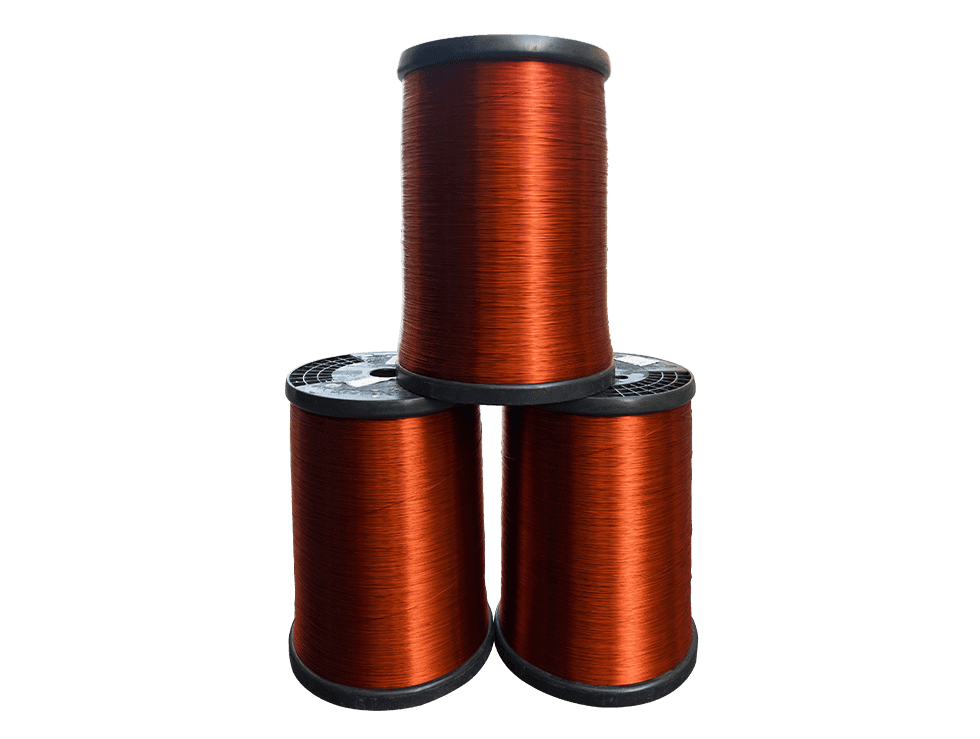
Standard 155 Class Aluminum Magnet Wire utilizes a durable polyester-based coating. This defines its baseline specifications and thermal limits accurately for general manufacturing. It operates safely at continuous internal temperatures up to 155 degrees Celsius. You use this wire in applications where extreme thermal cycling is not a daily occurrence. Polyester Enameled Aluminum Wire represents a highly cost-effective solution for many standard electrical applications. You will find it commonly used in standard dry-type transformers and lighting ballasts. Fractional horsepower motors benefit greatly from this specific material class due to its flexibility. Consumer electronics, where extreme heat is not a primary factor, rely heavily on this thermal rating. Ceiling fans, small residential water pumps, and HVAC blower motors utilize Class 155 extensively to keep manufacturing costs low while maintaining reliable performance. The thermal curing process of polyester enamel ensures a smooth, pinhole-free surface that resists mechanical abrasion. This allows the wire to survive high-speed automated winding machines without shedding its insulation.
More demanding applications require advanced chemical and thermal advantages to prevent catastrophic failure. Polyesterimide Enameled Aluminum Wire pushes thermal endurance significantly higher than standard polyester. The imide ring structure within the polymer chain provides exceptional heat resistance and mechanical toughness. It resists softening at high temperatures. These advanced coatings achieve Class 180 and Class 200 ratings effortlessly. They withstand continuous thermal cycling without degrading, melting, or becoming brittle. These high-temperature variants suit heavy-duty industrial applications perfectly. Environments subjected to continuous thermal stress demand this level of resilience. You can deploy them in high-load industrial crane motors, traction motors, and specialized power transformers with absolute confidence. Variable Frequency Drives (VFDs) control many of these industrial motors. VFDs generate rapid voltage pulses that cause corona discharge within the motor windings. Corona discharge produces ozone, which rapidly degrades standard insulation. Polyesterimide handles these electrical stresses and resists chemical attack while maintaining strict thermal stability.
Enamel Type | Thermal Class | Continuous Operating Temp | Primary Applications |
|---|---|---|---|
Polyester | Class 155 | 155°C | Consumer electronics, fractional HP motors, standard dry-type transformers |
Polyesterimide | Class 180 / 200 | 180°C - 200°C | Industrial motors, heavy-duty transformers, high thermal cycling environments |
Polyurethane | Class 130 / 155 | 130°C - 155°C | Relays, small ignition coils, high-frequency telecommunication devices |
Polyamide-imide (PAI) | Class 220 | 220°C | Aerospace actuators, severe-duty traction motors, high-overload generators |
Electric vehicle manufacturing goals focus heavily on maximizing system efficiency. You must achieve higher performance, lower production costs, and greater environmental efficiency simultaneously. Enameled aluminum wire aligns perfectly with these modern automotive objectives. Electric vehicle engineers obsess over unsprung mass and overall vehicle weight. Every kilogram removed from the powertrain extends the battery range. Lightweighting impacts overall battery range directly and measurably on the road. A lighter traction motor improves vehicle dynamics, suspension response, and handling characteristics. It also contributes to the reduction of the vehicle's total carbon footprint during manufacturing, as refining and transporting aluminum requires less energy overall compared to copper. The reduced moment of inertia allows the motor to respond faster to driver acceleration commands. Engineers increasingly explore aluminum for complex stator windings in EV powertrains. While hairpin copper windings dominate some EV sectors, round aluminum wire remains highly relevant for specific stator designs and auxiliary motors. The mass reduction often offsets the need for larger, heavier battery packs to achieve the exact same driving range.
Engineers must analyze space-to-weight ratio trade-offs carefully during the initial design phase. This applies heavily to both dry-type cast resin transformers and oil-filled distribution transformers. Distribution transformers step down high voltage for residential and commercial use. Engineers balance the core window area against the winding volume. Aluminum windings require a larger physical footprint due to their lower electrical conductivity. You must use thicker wire to achieve the exact same electrical resistance as copper. However, this increased volume is often offset by other structural factors. The drastic reduction in core coil weight means the transformer housing requires less support. You save on the heavy steel and framing needed to hold the active unit. The overall installation becomes lighter and easier to transport to remote utility sites. Pole-mounted distribution transformers benefit immensely from this weight reduction. A lighter transformer puts less physical strain on the utility pole and requires less heavy-lifting equipment during installation.
High-volume, highly commoditized electrical components demand strict material cost control to remain competitive. Compressor motors and microwave transformers represent prime examples of this intense manufacturing pressure. Evaluating the lifecycle cost benefits reveals a strong case for widespread aluminum adoption. The material cost savings at high production volumes are substantial and immediate. The slight increase in component size rarely impacts the final appliance dimensions negatively. Manufacturers maintain profit margins while delivering reliable, long-lasting performance to consumers. Washing machine motors and refrigerator compressors utilize aluminum windings successfully across the globe. Modern automated manufacturing lines handle the material efficiently once properly calibrated for aluminum's specific yield strength. You can scale production rapidly without worrying about sudden spikes in raw material commodity pricing.
You cannot ignore the fundamental physical reality of the base metal. Aluminum possesses approximately 61% the electrical conductivity of standard copper. This necessitates a larger cross-sectional area to carry the exact same electrical current safely without overheating. To carry the same current, the aluminum wire needs roughly 1.6 times the cross-sectional area. Engineers must redesign slot fill ratios and coil dimensions accordingly. Magnetic core sizes often need slight adjustments to accommodate the increased winding volume. You must calculate the exact wire gauge required to match the original copper performance. Typically, you move down two AWG sizes to match the resistance profile of copper. For example, you replace a 10 AWG copper wire with an 8 AWG aluminum wire. The stator slots in a motor must be large enough to accept this increased wire volume. If the slot fill factor exceeds 80%, automated winding becomes impossible. Engineers often adjust the lamination stack length or the slot geometry to make room for the aluminum wire. This redesign phase is crucial for successful and safe implementation. Failing to account for the conductivity difference results in excessive heat generation and premature motor failure.
Galvanic corrosion presents a critical risk during the manufacturing and assembly process. Rapid aluminum oxide formation at connection points can ruin an electrical joint completely. You cannot solder aluminum wire using standard rosin-core solder and a soldering iron. The oxide layer prevents the solder from wetting the base metal. Galvanic corrosion will destroy the joint if moisture bridges the gap between aluminum and a dissimilar metal like copper or brass. You must implement strict mitigation strategies on the assembly line to prevent this. Industry-standard joining techniques are mandatory for long-term reliability and safety. Specialized bimetallic piercing crimps feature internal serrated teeth. When compressed with a hydraulic tool, these teeth bite through the enamel and the oxide layer, embedding directly into the clean aluminum core. Ultrasonic welding uses high-frequency vibrations to scrub the oxide layer away while simultaneously fusing the aluminum to the terminal under high pressure. This creates a solid-state molecular bond with zero electrical resistance. If using bolted connections, the application of specialized anti-oxidant pastes prevents future oxidation from occurring at the joint. These methods guarantee a highly stable electrical connection over the component's entire lifespan.
Aluminum exhibits lower tensile strength and higher yield characteristics compared to copper. Copper has a tensile strength of roughly 220 MPa, while aluminum sits around 90 MPa. Aluminum yields and stretches much easier under tension. This affects how the wire behaves on high-speed automated winding machines. High-speed winding machines pull the wire through a series of pulleys, tensioners, and ceramic guides. If you run aluminum wire using copper tension settings, the wire will stretch. This reduces the cross-sectional area, increases electrical resistance, and creates localized hot spots in the coil. You must make necessary adjustments to machine tension control systems before production begins. Tooling modifications prevent wire elongation during the rapid winding process. Proper calibration ensures the wire maintains its intended cross-sectional area throughout the coil. Operators must monitor the winding dynamics closely to maintain strict quality control standards. Flyer winding and needle winding machines require specific pulley and guide adjustments. Ensure all ceramic guides are polished perfectly smooth. Any rough edge will scrape the enamel or snag the softer aluminum wire during high-speed operation.
To successfully transition your manufacturing lines to enameled aluminum wire and capture the associated weight and cost benefits, execute the following engineering steps.
Audit current coil designs to determine slot fill flexibility and strict volume constraints.
Calculate the potential weight savings for your specific motor or transformer application to justify the redesign.
Implement specialized termination techniques like ultrasonic welding to ensure stable, oxidation-free connections.
Adjust automated winding machine tensions to accommodate the lower yield strength of aluminum wire.
Consult a specialized Aluminum Winding Wire Supplier for prototyping and precise thermal class matching.
A: The primary difference lies in their thermal class ratings and chemical resistance. Polyester wire typically meets Class 155 standards, making it suitable for standard applications like fractional horsepower motors. Polyesterimide wire achieves Class 180 or Class 200 ratings. It offers superior thermal endurance and chemical resistance for heavy-duty industrial environments and motors controlled by variable frequency drives.
A: No, direct replacement is rarely possible. Aluminum has roughly 61% the conductivity of copper. You must redesign the motor to accommodate a larger cross-sectional area, typically moving down two AWG sizes. This ensures the aluminum wire can carry the same electrical current without overheating.
A: Reliable termination requires specialized techniques to break through the tough oxide layer. You should use ultrasonic welding or specialized piercing bimetallic crimps that bite into the core. Applying anti-oxidation compounds at the connection points is also critical. These methods ensure a stable, long-lasting electrical connection.
A: The base metal does not dictate the operational lifespan. Lifespan depends entirely on adhering to the correct thermal class and utilizing proper termination techniques. When engineered correctly with the right enamel and mechanical splices, aluminum windings offer an operational lifespan comparable to copper equivalents.
A: Electric vehicle manufacturers prioritize lightweighting to improve overall battery range. Aluminum significantly reduces the weight of traction motors. This lowers the moment of inertia, improves vehicle dynamics, and increases overall environmental efficiency while reducing manufacturing costs and unsprung mass.